Guide for advertisers
What is DOOH? OOH, DOOH and programmatic DOOH, explained
DOOH stands for digital out-of-home. It is advertising on digital screens in places people go outside their homes: roadsides, malls, transit, and inside shops, cafes and clinics.
OOH is the wider category, which also includes printed billboards and posters. Programmatic DOOH is DOOH bought through automated software instead of a direct booking.
 By OOHUP Marketing TeamLast updated
In short
- DOOH is digital out-of-home: ads on digital screens outside the home.
- OOH includes both printed and digital formats. DOOH is the digital part.
- Programmatic DOOH (pDOOH) is DOOH bought and delivered through automated platforms.
- Mordor Intelligence estimates the UAE DOOH market at USD 53.91 million in 2025, growing to USD 114.30 million by 2031.
- On OOHUP screens a slot is 10 seconds in a 60-second loop of six slots, so an ad plays about once a minute.
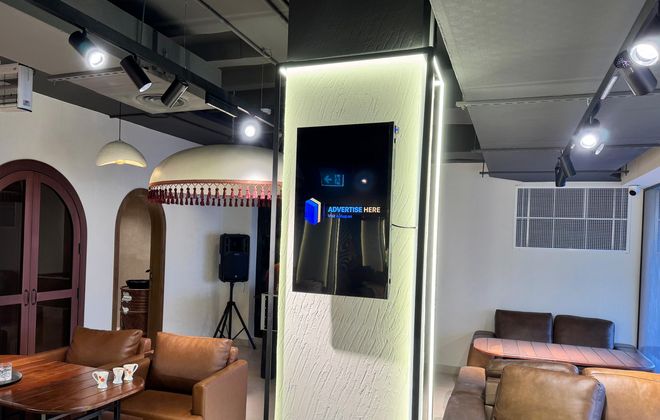
What is DOOH?
DOOH is digital out-of-home advertising: ads shown on digital screens in public and commercial places. The screen can be a roadside LED billboard, a panel in a mall or Metro station, or a screen inside a cafe or clinic.
A DOOH screen plays a repeating sequence of ads called a loop. Each advertiser books a slot in that loop. The OOH and DOOH glossary defines these terms one by one.
How is DOOH different from OOH?
OOH is the whole category of out-of-home advertising, and DOOH is the part that runs on digital screens. A printed billboard is OOH. An LED billboard or an in-store screen is DOOH, which is also OOH.
| Printed OOH | DOOH | |
|---|---|---|
| Surface | Printed poster, vinyl or panel | Digital screen |
| Changing the artwork | Reprint and reinstall | Upload a new file |
| Advertisers per site | One per face | Several, taking turns in a loop |
| Motion | Still image | Still image, animation or video |
| Proof it ran | Photo of the posted site | Play logs from the screen |
Read more about formats and costs in our guide to OOH advertising in Dubai.
What is programmatic DOOH?
Programmatic DOOH, or pDOOH, is DOOH bought and delivered through automated platforms instead of a direct booking. The advertiser sets rules such as time of day, location or audience, and software places the ad on screens that match.
Most UAE DOOH is still bought directly. Mordor Intelligence estimates that non-programmatic screens held 59.87% of the UAE DOOH market in 2025, and that programmatic formats will grow at 16.03% a year through 2031.
OOHUP is a direct buy. You pick areas or venue types, and you book slots on those screens.
How big is DOOH in the UAE?
Mordor Intelligence estimates the UAE DOOH market at USD 53.91 million in 2025 and USD 62.61 million in 2026. It forecasts USD 114.30 million by 2031, a compound annual growth rate of 12.79% from 2026 to 2031.
These are one research firm's estimates. In the same report, retail is the largest spending industry, at 27.06% of spend in 2025.
Media owners are investing in screens. invidis reported in May 2026 that Hills Advertising is investing USD 265 million in digital out-of-home in Dubai. The CEO of BackLite Media told AGBI that sites it converted to digital now bring in eight times the revenue they did as static boards.
What does a DOOH ad slot look like?
A slot is a fixed length of time in a repeating loop. On every OOHUP screen the loop is 60 seconds long and has six 10-second slots, so one slot plays about once a minute.
- One slot is one sixth of the loop.
- The loop runs from the time the venue opens until it closes.
- Screens are portrait or landscape. OOHUP builds your artwork in both, for free.
- Proof of play is logged per screen per day, and you get photos of the ad on screen.
Other networks use different loop lengths. Always ask for the loop length and the number of slots, because together they decide how often your ad plays.
Is in-store screen advertising DOOH?
Yes. Screens inside shops, cafes, salons and clinics are DOOH, often called place-based or in-venue DOOH. The difference from a roadside screen is the audience: people who are waiting or sitting, close to the screen, in a place you chose.
OOHUP runs this kind of screen in Dubai and Sharjah. Our guide to in-store advertising in the UAE explains how to pick venues and measure results. OOHUP campaigns start from AED 380. The price depends on the campaign length, the number of screens and the area.
Frequently asked questions
Is DOOH the same as digital signage?
No. Digital signage is the screen and the software that runs it, whatever it shows. DOOH is advertising sold on screens in public or commercial places. A menu board is digital signage. A paid ad slot on a cafe screen is DOOH.
Can I buy DOOH without an agency?
Yes, on networks that sell directly. With OOHUP you send a short brief, pick areas or venue types and book slots yourself. Large roadside sites are usually booked through the media owner or an agency.
How do I know my ad played?
Ask for proof of play: a record of when your ad ran on each screen. OOHUP logs proof of play per screen per day and sends photos of the ad on screen.
How long is a DOOH ad?
It depends on the network. On OOHUP screens an ad is 10 seconds long, in a 60-second loop of six slots.
Book DOOH slots on screens inside venues
Tell us your area and what you want to promote. We reply on WhatsApp with the screens that fit.
Sources
Third-party facts and figures on this page come from the pages below. We opened and read each one.
- Mordor Intelligence: United Arab Emirates DOOH Market (2026 to 2031). Market size, growth rate, programmatic share and spend by industry. These are Mordor Intelligence estimates.
- invidis: Hills Advertising invests USD 265m in DooH (12 May 2026). The role of Mada Media in organising, developing and regulating out-of-home advertising in Dubai.
- AGBI: The million-dirham draw of digital billboards (21 January 2025). Billboard prices on Sheikh Zayed Road and at Yas Marina, the Mordor Intelligence forecast for UAE OOH spend, and quotes from BackLite Media.